This Spring I’ve been buffing up on my Warblers. Something about their bright colors, transient nature and forest dwelling propensity pulls me to them. Up on Strawberry Hill in Golden Gate Park, I saw a flash of yellow flit through the upper canopy. Atop this brilliant plumage sat a dense black mop of feathers - almost like a little wig. Not yet fluent with Warblers, I took that mental image home and compared to the field guides. That bird was a Wilson’s Warbler. What a look! And with that initial encounter, a new quest began: to photograph this little bird and fine head of hair.
Here is a collection of my Wilsons Warbler images from this Spring.
My first Wilson’s Warbler image! Darting through the undergrowth, almost soundless, I saw the flash of yellow with my eyes, but took a while to locate it with my lens. After flitting from branch to branch it disappeared into the shrub.
I’d heard Wilson’s Warblers around Glen Canyon before, but they were usually hidden - singing atop some tangled knot of bush and branch. This one appeared out of nowhere, in silence, just as I had muttered the name “Wilson’s Warbler”. A blurry haze is the best image I got before he disappeared deep underneath the shrubbery. Whispering his name again did not bring him back.
Those first pictures are some of the only times I’ve seen a Wilson’s out on a bare branch. In most cases they patrol within the leaves and twigs of the bushes and tree’s. Trying to keep up with them as they rapidly traverse this dense environment is tough enough, let alone focussing on them and not the leaves!
Though Wilson’s often forage closer to the ground than other Warblers, they sometimes mock us from the tops of tree’s with a strong song. This gives away their position, but actually getting eyes on is another challenge. This individual gave an inquisitive look as he traversed from one singing perch to another.
Whilst the dense canopy often blocks and blurs, it sometimes provides beautiful natural geometry and framing.
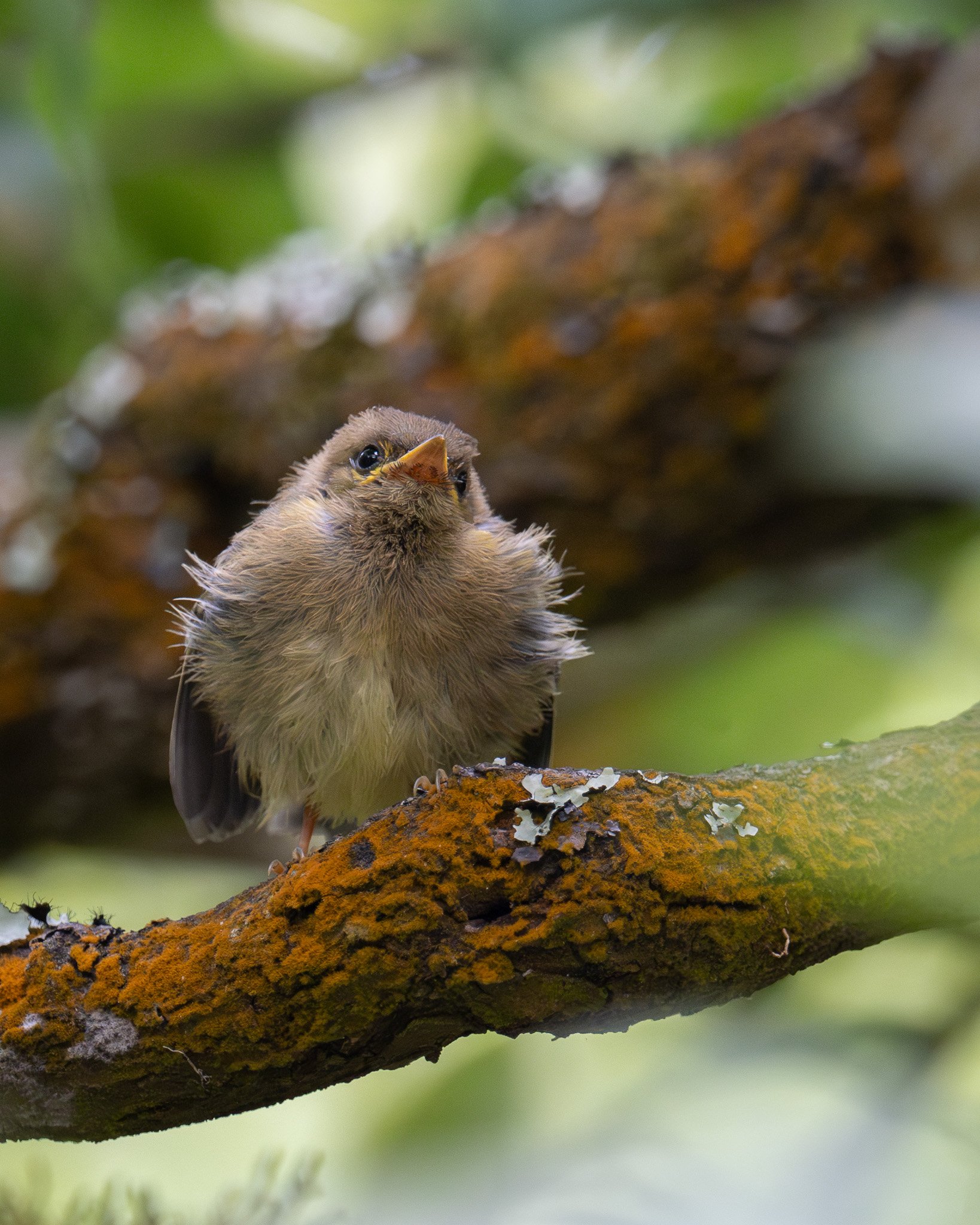
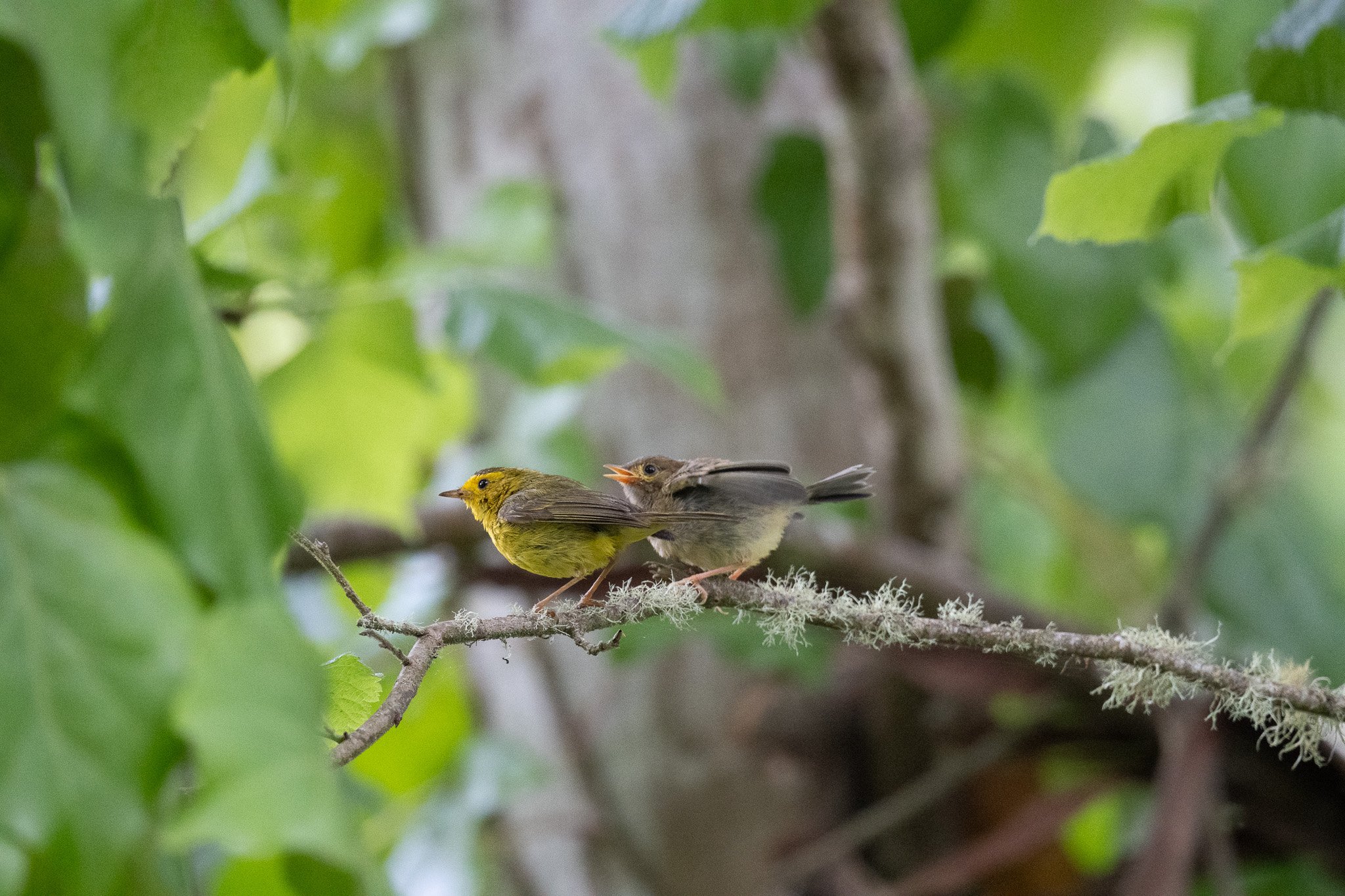
Later in Spring I found a Wilson’s Warbler family, with two adults tending to a needy chick. The juvenile was less mobile, less shy and very persistent in asking for food. I watched as each parent caught flies and shuttled them back to their young.
While the adults scanned the trees for food, the chick waited, expectantly.
Surprisingly, the chick was as big as his parents! Though his bright yellow coloring and black head of hair had yet to come through.
Messy eater!
Despite the constant stream of food given to him, more attention is of course needed.